Layered Lighting for a Bedroom: A Practical Guide
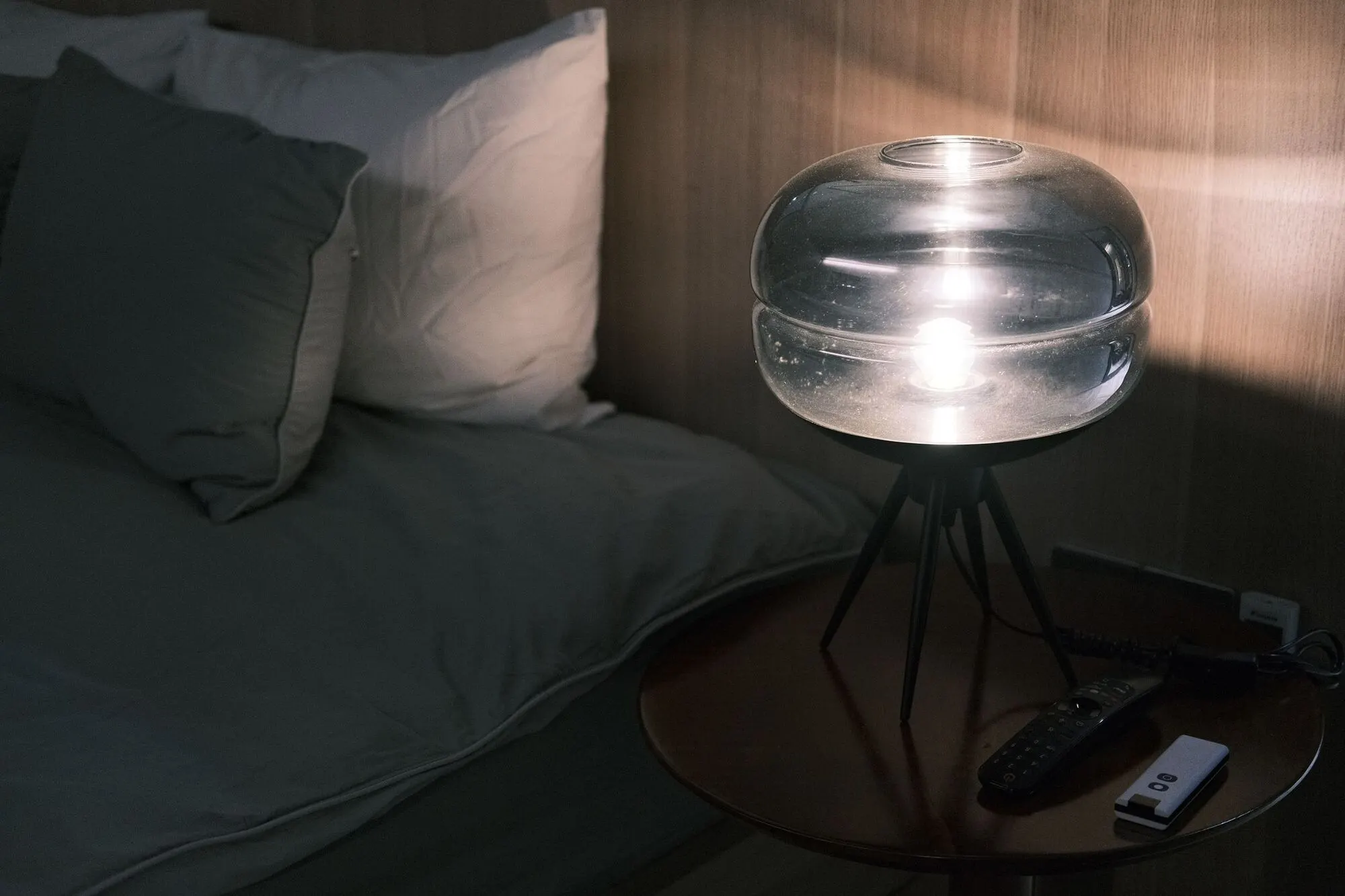
A bedroom has more jobs than most rooms. It has to help you wake up, dress, read, work for an hour now and then, and then let you wind down. One ceiling fixture in the middle of the room cannot do all of that. It is too bright when you want to relax and in the wrong place when you want to read.
The fix is to plan the light in layers. Each layer does one job, and you mix them depending on the time of day.
Layer 1: Ambient light
Ambient light is the general glow that lets you move around safely. In a bedroom it should be soft and even, not a single hard point.
Good options:
- A diffused ceiling fixture with a fabric or opal shade, rather than a bare bulb.
- Recessed downlights spaced evenly, placed away from the bed so nobody stares into them while lying down.
- A cove or indirect strip that bounces light off the ceiling. This gives the softest result and hides the source.
A useful habit: put ambient light on a dimmer. Full brightness is handy when you clean or pack a suitcase, but most evenings you will want it far lower.
Layer 2: Task light
Task light is focused light for a specific activity. In a bedroom the main tasks are reading in bed, dressing, and sometimes a desk.
- Bedside reading. Wall-mounted swing-arm lamps or adjustable sconces work well because they free up the nightstand and can be aimed at the page rather than at your partner. Mount them so the shade sits a little above shoulder height when you sit up in bed.
- Wardrobe. A small strip or puck light inside the wardrobe, ideally on a door switch, makes it much easier to see colours.
- Dressing mirror. Light from both sides of the face is more flattering and accurate than light from directly above, which casts shadows under the eyes.
- Desk. If the bedroom doubles as an office, a dedicated desk lamp is better than raising the whole room's brightness.
Layer 3: Accent light
Accent light draws the eye to something: a headboard, a textured wall, artwork, a plant. It is what makes a room look designed rather than simply lit.
Ideas that suit bedrooms:
- A wall-washer or concealed strip behind the headboard.
- A small picture light above a framed print.
- Up-lighting a plant or a curtain from the floor.
Accent light should be gentler than you think. The goal is contrast and depth, not a spotlight.
Layer 4: Decor and night light
The last layer is decorative and low-level light: a table lamp you love, a paper lantern, candles, or a dim night light along the path to the bathroom. A low-level night light (at skirting height, motion-activated or very dim) is one of the most useful additions to a bedroom because it lets you walk at night without switching on anything bright.
Colour temperature in a bedroom
Colour temperature is measured in Kelvin (K). Lower numbers look warmer and more amber; higher numbers look cooler and whiter.
For bedrooms, warm white around 2700K is the common choice for ambient and decor light, and many people go even warmer (2200K–2400K) for bedside lamps used late in the evening. A slightly cooler, neutral white (around 3000K–3500K) can be useful inside a wardrobe or at a dressing mirror, where you want to judge colours. Keep the lamps in one layer at the same colour temperature so the room does not look patchy.
Switching and controls
Good layering only works if the switches make sense:
- A switch for ambient light at the door.
- Switches or pull-cords for reading lights within reach of each side of the bed.
- Ideally, a way to turn off the ambient light from the bed (a two-way switch or a smart switch).
- Dimmers on ambient and accent layers.
If rewiring is not an option, plug-in sconces, smart bulbs and smart plugs can give you most of the same control. Any fixed wiring should be done by a qualified electrician.
Putting it together: a sample evening
- Morning: ambient on at a medium level, wardrobe light while dressing.
- Evening: ambient dimmed low, headboard accent on, one table lamp.
- Reading: ambient off, reading light on your side only.
- Night: everything off except a low night light on the path to the door.
How a lighting plan helps
Thinking in layers is easier when you can see the room. A LightDecor room plan gives you a 3D model of your bedroom built from your photos and measurements, with each light spot marked by position, height, brightness and colour temperature, plus a decor list sized to the room. You can use it yourself or hand it to an electrician. It is design guidance, not electrical advice, but it makes the conversation about where everything goes much quicker.
Start with the four layers, put the main ones on dimmers, and keep colour temperatures consistent. Your bedroom will work better at every hour of the day.
A 3D model per area with every light spot marked, a light-spot file, a decor list with buy links, a PDF and one ZIP.
See the plans → Next: Villa Outdoor Lighting: Terraces, Pools and Gardens →